⏱ 10 min read
Eating well does not have to mean following a strict diet, counting every calorie, or giving up the foods you enjoy.
A balanced diet is much simpler than that. It means giving your body a variety of nutritious foods in amounts that fit your needs, while keeping less nutritious choices in moderation.
There is no single perfect menu that works for everyone. Your age, activity level, culture, food preferences, health needs, and lifestyle all matter.
What stays consistent are the basic principles: variety, balance, moderation, and enough nutrients and energy to support your body.
The goal is not perfection.
The goal is to build an eating pattern you can live with.
What Is a Balanced Diet?
A balanced diet is an eating pattern that provides enough energy and nutrients from a variety of foods while maintaining balance and moderation.
The World Health Organization describes four core principles of a healthy diet: adequacy, balance, moderation, and diversity.
In everyday language, that means eating enough to meet your body’s needs, choosing foods from different groups, balancing the energy you consume with the energy you use, and limiting foods or ingredients that are better eaten less often.
For most people, a balanced eating pattern includes vegetables, fruits, protein foods, whole grains and other fiber-rich carbohydrate sources, healthy fats, and dairy or appropriate fortified alternatives.
The current Dietary Guidelines for Americans, 2025–2030 also emphasize whole, nutrient-dense foods such as protein foods, vegetables, fruits, dairy, healthy fats, and whole grains.
A balanced diet is not one particular breakfast, lunch, or dinner.
It is the pattern created by your choices over time.
Why Does a Balanced Diet Matter?
Food provides much more than calories.
Protein supplies building blocks the body uses for many important functions. Carbohydrates are a major source of energy. Dietary fats also play essential roles, while vitamins, minerals, fiber, and other nutrients support normal body functions.
Eating a variety of foods can make it easier to get a wider range of nutrients than following a restrictive diet based on only a few foods.
Healthy eating patterns are also associated with better long-term health and can help reduce the risk of conditions such as heart disease and type 2 diabetes.
But there is another benefit that is easy to overlook:
simplicity.
When you understand the basic structure of a balanced meal, you do not need a new diet rule every week.
You can look at the food in front of you and ask:
Do I have some vegetables or fruit? A useful source of protein? A quality source of carbohydrates? Some healthy fat?
That simple habit can be more useful in everyday life than trying to make every meal nutritionally perfect.
What Foods Are Part of a Balanced Diet?
No single food can provide everything your body needs.
That is why variety matters.
Vegetables and Fruits
Vegetables and fruits provide vitamins, minerals, fiber, and many other naturally occurring compounds.
Try to vary your choices instead of eating the same foods every day.
Different colors can be a simple reminder to add variety: leafy greens, tomatoes, carrots, peppers, berries, oranges, apples, and many others.
Fresh produce is not the only option. Frozen and canned vegetables and fruits can also be practical choices, especially when they do not contain large amounts of added sugar or sodium.
The important thing is not to make your plate look perfect for a photograph.
It is to eat these foods regularly.
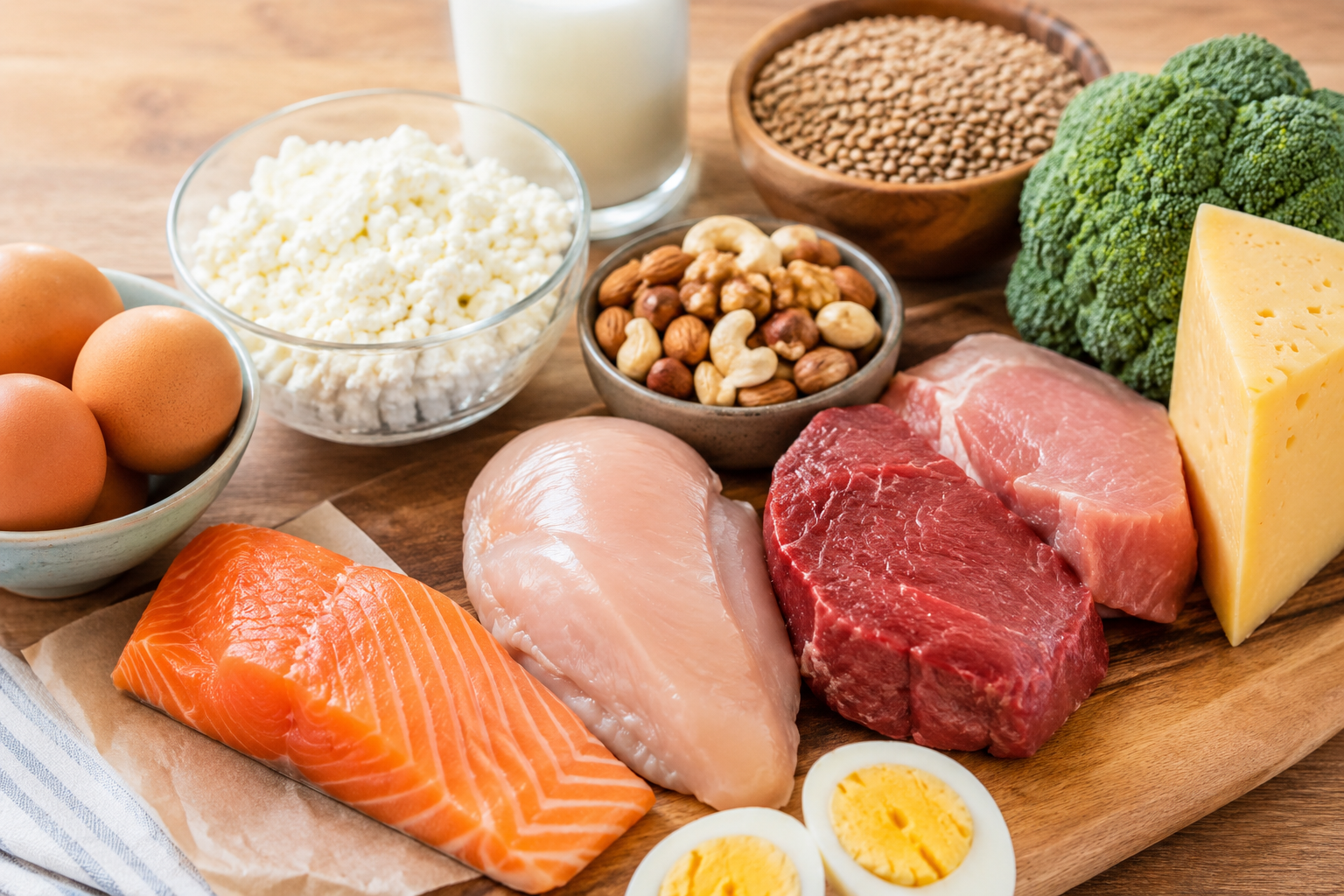
Protein Foods
Protein is found in both animal and plant foods.
Examples include:
- eggs;
- fish and seafood;
- poultry;
- meat;
- yogurt and other dairy foods;
- beans;
- lentils;
- peas;
- soy foods;
- nuts;
- seeds.
Using different protein sources adds variety and makes it easier to build meals around your preferences, budget, and lifestyle.
You do not need to turn every meal into a protein challenge.
The goal is to include enough protein for your individual needs as part of your overall diet.
Carbohydrates and Whole Foods
Carbohydrates are often treated as something to avoid, but that idea is too simple.
Foods such as oats, potatoes, brown rice, whole-grain bread, beans, fruits, and vegetables provide carbohydrates along with different amounts of fiber, vitamins, minerals, and other nutrients.
Carbohydrates are an important source of energy for the body.
For most people, it makes more sense to focus on the quality of carbohydrate foods rather than trying to avoid carbohydrates completely.
Whole grains, vegetables, fruits, beans, and lentils can all be part of a balanced eating pattern.
So instead of asking:
“Are carbs bad?”
A better question is:
“What kind of carbohydrate food am I choosing most often?”
That is a much more useful way to think about nutrition.
Healthy Fats
Fat is an essential part of the diet.
Useful sources can include:
- nuts;
- seeds;
- avocados;
- olives;
- fish;
- plant oils.
The type of fat matters.
Unsaturated fats are generally preferred over large amounts of saturated fats, while industrially produced trans fats should be avoided as much as possible.
You do not need to fear fat.
But you also do not need to add large amounts of it to every meal.
As with the rest of your diet, balance matters.
Dairy or Appropriate Fortified Alternatives
Milk, yogurt, cheese, and other dairy foods can provide protein, calcium, and other nutrients.
People who do not consume dairy can still build a healthy diet in other ways.
When choosing a dairy alternative, look at more than the name on the package. Protein, calcium, vitamin content, added sugar, and fortification can vary widely between products.
Appropriate fortified alternatives can help provide nutrients that might otherwise be supplied by dairy foods.
This is another reason to look at your whole diet rather than judging health by one individual food.
How to Build a Balanced Meal
You do not need a calculator to start building better meals.
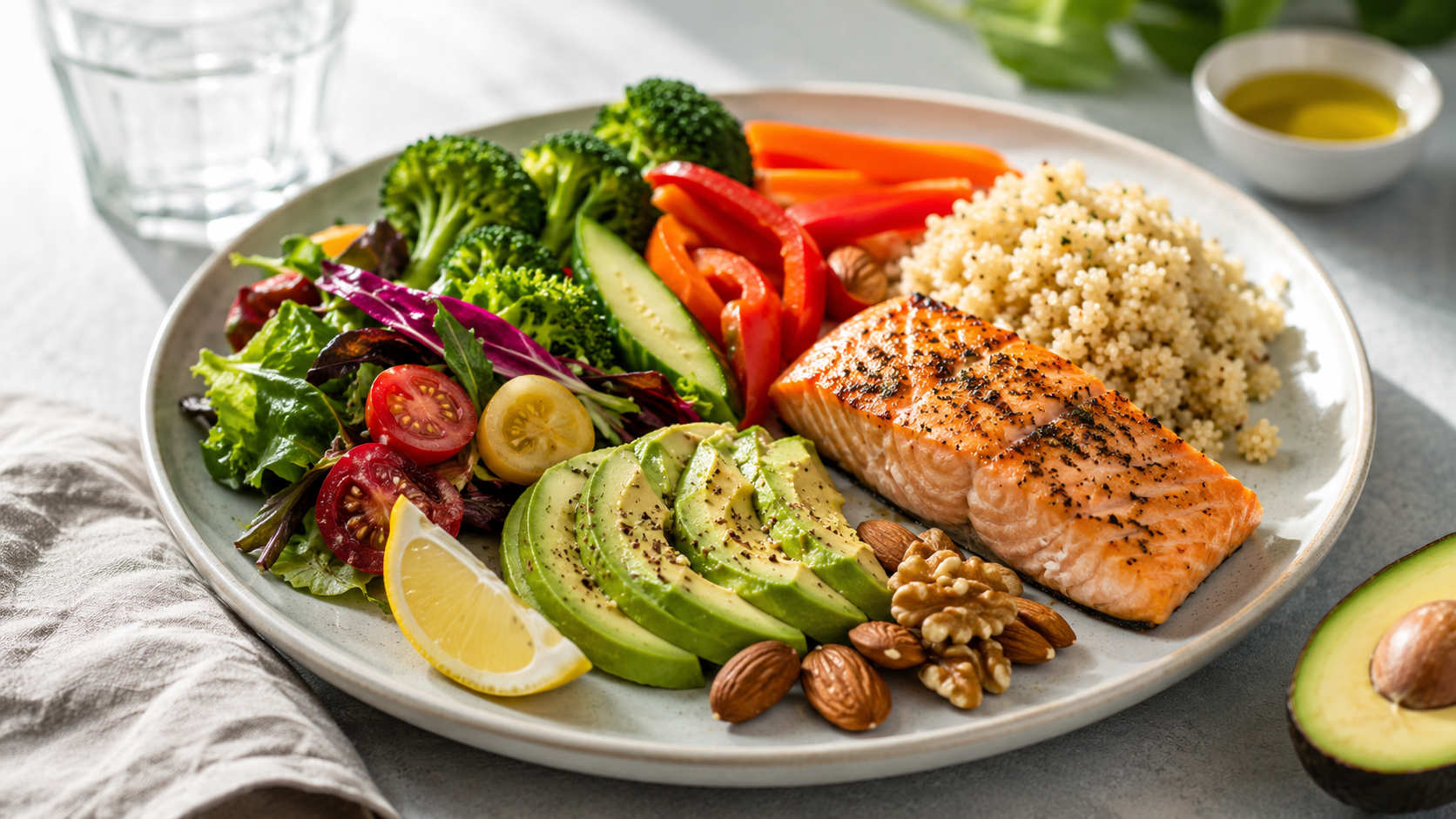
A practical meal might contain:
- vegetables and/or fruit;
- a source of protein;
- a fiber-rich carbohydrate food;
- a source of dietary fat;
- water or another unsweetened drink.
The amounts will not be identical for every person.
Someone who exercises regularly may have different energy needs from someone who is less active.
Age, body size, activity level, goals, and other individual factors also matter.
That is why a healthy plate should be a framework, not a rigid formula.
You can adjust it to your real life.
What Does Balanced Eating Look Like in Real Life?
Healthy eating becomes easier when it looks like normal food rather than a special “diet.”
For example, one day might look like this:
Breakfast: oatmeal with fruit, nuts, and yogurt.
Lunch: chicken or beans with vegetables and brown rice.
Snack: fruit with yogurt or a small handful of nuts.
Dinner: fish, potatoes, and vegetables.
This is only an example, not a prescribed meal plan.
Another person could eat completely different foods and still follow a balanced diet.
Culture matters.
Budget matters.
Taste matters.
What is available in your local store matters.
A healthy eating pattern needs to work outside a nutrition textbook.
It needs to work on a busy Tuesday.
Common Mistakes That Make Healthy Eating Harder
One of the biggest mistakes is believing that healthy eating has to be perfect.
It does not.
You can follow a nutritious eating pattern and still enjoy foods that are higher in sugar, sodium, or saturated fat occasionally.
What matters most is the overall pattern.
Another common mistake is labeling individual foods as simply “good” or “bad.”
Food choices exist in context.
A cookie does not destroy a healthy diet any more than one salad creates one.
Very restrictive rules can also make eating unnecessarily complicated.
Removing an entire food group without a medical, ethical, or personal reason may reduce variety and can sometimes make it more difficult to meet nutritional needs.
Another mistake is assuming that every processed food is automatically unhealthy.
Processing covers a very wide range of foods. A better approach is to pay particular attention to highly processed foods that contain large amounts of added or free sugars, sodium, refined carbohydrates, or unhealthy fats, and limit how often they dominate your diet.
Finally, do not let the idea of “superfoods” distract you from ordinary nutritious foods.
You do not need rare or expensive ingredients.
Fruit, vegetables, beans, eggs, oats, nuts, yogurt, whole grains, and other everyday foods can all contribute to a healthy diet.
5 Simple Ways to Start Eating Better
You do not have to redesign your entire diet today.
Start with one or two habits you can repeat.
1. Add Something Before You Remove Something
Add vegetables to lunch.
Add fruit to breakfast.
Add a useful protein source to a meal that usually leaves you hungry soon afterward.
Improvement does not always need to begin with restriction.
2. Choose More Whole and Minimally Processed Foods
Build more of your meals around foods such as vegetables, fruits, eggs, fish, beans, lentils, yogurt, nuts, seeds, and whole grains.
Highly processed foods that are especially high in added sugars, sodium, refined carbohydrates, or unhealthy fats are better kept as a smaller part of the overall diet.
You do not need to eliminate every packaged food.
Focus on the overall pattern.
3. Make Water Your Regular Drink
Water is a simple everyday choice.
Still or sparkling water and other unsweetened beverages can help with hydration without adding large amounts of sugar.
You do not need complicated drinks to stay hydrated.
4. Make the Healthy Choice Easier
Good intentions work better when your environment supports them.
Wash fruit so it is ready to eat.
Keep frozen vegetables available.
Prepare enough protein for more than one meal.
Cook extra rice, potatoes, or whole grains.
Prepare breakfast the night before when mornings are busy.
A good nutrition routine should reduce friction, not create more of it.
5. Think in Weeks, Not Individual Meals
One meal does not define your diet.
If lunch was heavier than usual, you do not need to punish yourself at dinner.
Simply return to your normal eating pattern.
Consistency matters much more than trying to eat perfectly every time.
Frequently Asked Questions
What Is a Balanced Diet?
A balanced diet is an eating pattern that provides enough energy and nutrients through a variety of foods while maintaining balance and moderation.
There is no single menu that works for everyone. Individual needs, culture, activity level, food preferences, and available foods can all influence what a healthy diet looks like.
What Foods Should a Balanced Diet Include?
For most adults, a balanced eating pattern can include vegetables, fruits, protein foods, whole grains and other fiber-rich carbohydrate foods, healthy fats, and dairy or appropriate fortified alternatives.
The exact amounts depend on the individual.
Can a Balanced Diet Help Maintain a Healthy Weight?
A balanced eating pattern can be part of healthy weight management, while individual energy needs vary according to factors such as age, body size, and physical activity.
Body weight is influenced by many factors, so no single food or meal can guarantee weight loss or weight maintenance.
Do I Need to Count Calories to Eat a Balanced Diet?
Not necessarily.
Calorie information can be useful in some situations, but many people can improve the quality of their diet by first focusing on food quality, reasonable portions, variety, and regular eating habits.
If you have specific medical or weight-management needs, personalized advice from a qualified healthcare professional or registered dietitian may be appropriate.
Can I Eat My Favorite Foods and Still Have a Balanced Diet?
Yes.
A balanced diet is based on your overall eating pattern, not one food or one meal.
Foods that are less nutrient-dense can still fit occasionally within an otherwise varied and nutritious diet.
The Better Healthy Life Takeaway
Healthy eating should make life better, not turn every meal into a test.
Start with nutritious everyday foods.
Build variety.
Include vegetables and fruits, protein, quality carbohydrate sources, and healthy fats.
Pay attention to portions without becoming obsessed with them.
Enjoy your food.
Then repeat the healthy choices often enough for them to become normal.
That is what makes a balanced diet sustainable.
Not perfection.
Consistency.
Nutrition & Medical Disclaimer
This article is for general educational purposes only and is not a substitute for personalized medical or nutrition advice.
Individual nutritional needs can vary.
If you are pregnant, have a diagnosed medical condition, take medication that may be affected by diet, have a history of an eating disorder, or require a therapeutic diet, consult your physician or a qualified registered dietitian before making major dietary changes.
Sources & References
- U.S. Department of Health and Human Services & U.S. Department of Agriculture — Dietary Guidelines for Americans, 2025–2030.
https://odphp.health.gov/our-work/nutrition-physical-activity/dietary-guidelines/current-dietary-guidelines - World Health Organization — Healthy Diet, updated January 26, 2026.
https://www.who.int/news-room/fact-sheets/detail/healthy-diet - World Health Organization & Food and Agriculture Organization of the United Nations — What Are Healthy Diets? Joint Statement.
https://www.who.int/publications/i/item/9789240101876