⏱ 10 min read
Protein seems to be everywhere right now. Supermarket shelves are full of high-protein yogurt, bars, shakes, cereals, breads, and snacks. Online, the message can be even louder: eat more protein, build more muscle, recover faster.
That makes a simple question surprisingly difficult to answer:
How much protein do I actually need?
There is no useful answer without some context. Your body weight matters, but so do your age, activity level, overall diet, health, and goals. A person who exercises four or five times a week may have different needs from someone of the same weight who rarely trains.
So instead of trying to eat as much protein as possible, it makes more sense to find an amount that fits your body and the way you live.
How Much Protein Do You Need Each Day?
For many adults, a useful starting range is about 0.55–0.73 grams of protein per pound of body weight (1.2–1.6 g/kg/day). The current Dietary Guidelines for Americans, 2025–2030 use this range as a general protein serving goal, with adjustments based on individual calorie needs.
What does that look like in real life?
If you weigh 154 lb (70 kg), the range works out to roughly 84–112 grams of protein per day.
You may have heard another recommendation: 0.36 grams per pound (0.8 g/kg/day). That is the long-standing Recommended Dietary Allowance, or RDA.
The RDA is designed to meet the basic needs of nearly all healthy adults. It is a useful reference, but it was not created as an ideal target for every active person.
Here are a few examples using the 1.2–1.6 g/kg range:
| Body Weight | Approximate Daily Protein |
|---|---|
| 132 lb (60 kg) | 72–96 g |
| 154 lb (70 kg) | 84–112 g |
| 176 lb (80 kg) | 96–128 g |
| 198 lb (90 kg) | 108–144 g |
Treat those numbers as a guide rather than a daily scorecard. Eating 91 grams one day and 103 the next is not a problem. Your usual eating pattern matters much more than hitting an exact number every 24 hours.
Why Does Your Body Need Protein?
Muscle gets most of the attention, but protein has many other jobs.
Your body uses it to maintain skin, organs, connective tissue, and other structures. Protein is also involved in tissue repair, enzymes, hormones, and normal immune function.
After you eat protein, digestion breaks it into smaller components called amino acids. An easy way to picture them is as building blocks your body can reuse.
Some amino acids can be made inside the body. Others — known as essential amino acids — have to come from food.
That is one reason protein matters even on a rest day. Your body does not stop maintaining and repairing itself because you skipped today’s workout.
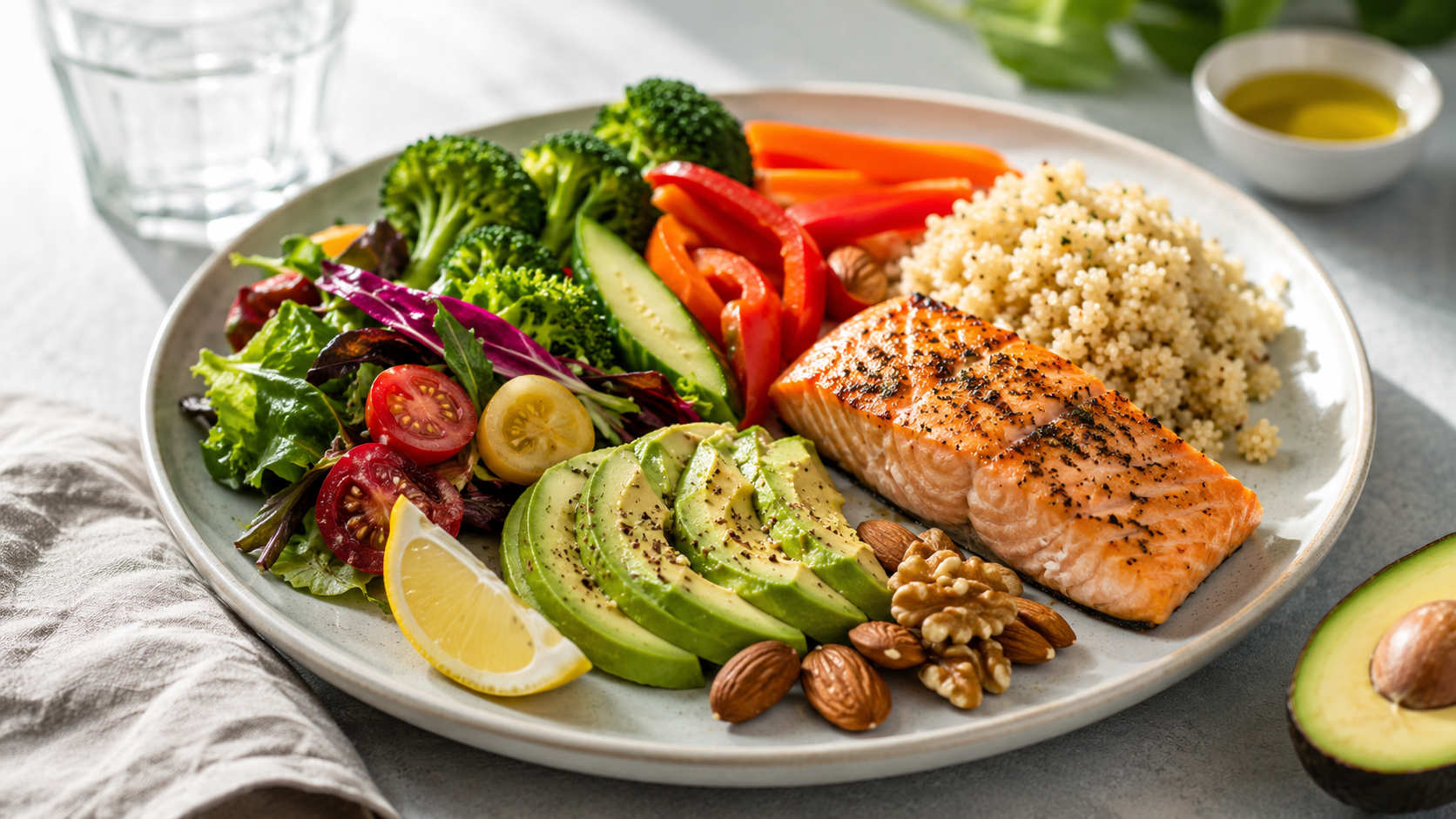
Still, protein should not crowd everything else off the plate. Vegetables, fruits, carbohydrates, healthy fats, fiber, vitamins, and minerals all have roles of their own.
Protein works best as part of a balanced diet, not as a replacement for one.
Is 0.36 g/lb Enough for Everyone?
For some people, it may be. For others, it may be lower than what makes sense for their lifestyle.
Imagine two adults who both weigh 176 lb.
One works at a desk and rarely exercises. The other trains with bodyweight exercises, strength work, running, or HIIT several times a week.
Their scales show the same number, but their bodies are dealing with different demands.
Regular exercise increases the need for recovery and adaptation. Age can also change the conversation because maintaining muscle and physical function becomes increasingly important over time.
None of this means that everyone should suddenly double their protein.
It simply means that 0.36 g/lb (0.8 g/kg) should be understood for what it is: a basic adult reference level, not a universal performance target.
The useful goal is enough protein for your circumstances — not the highest amount you can fit into your diet.
Do Active People Need More Protein?
Often, yes.
Training creates a reason for the body to repair and adapt. Protein supplies amino acids that are used in that process.
Sports nutrition guidance commonly places exercising adults above the traditional RDA. A frequently used range is about 0.64–0.91 grams per pound (1.4–2.0 g/kg/day) for people who train regularly.
The upper end is not automatically better.
Someone doing moderate workouts a few times a week may have no reason to aim for the same intake as a person training hard almost every day. The type of exercise, training volume, total calories, and goals all affect the bigger picture.
It is also easy to focus so heavily on protein that the rest of the diet gets forgotten.
If you train regularly, you still need enough total energy. Carbohydrates can be especially useful for exercise and recovery. Healthy fats, vegetables, fruits, and fluids also matter.
Protein cannot compensate for an otherwise poorly built diet.
How to Calculate Your Daily Protein Needs
You can estimate your protein range without making nutrition complicated.
For pounds, use:
Body weight in pounds × grams of protein per pound
Suppose you weigh 154 lb and are using a general range of about 0.55–0.73 grams per pound.
The calculation is:
154 × 0.55 ≈ 85 grams
At the upper end:
154 × 0.73 ≈ 112 grams
So you would be looking at approximately 85–112 grams per day.
If you prefer metric units, the same person weighs about 70 kg:
70 × 1.2–1.6 g/kg = 84–112 grams per day
The small difference comes from rounding.
Once you have a rough target, you do not need to spend the rest of your life weighing chicken and opening a calculator before dinner. Look at your usual meals instead. If they regularly contain useful protein foods, you may already be closer to your target than you think.
Does It Matter When You Eat Protein?
For most people, the first priority is getting enough protein over the whole day.
Timing can still be useful, especially if you exercise, but it does not need to become another strict rule.
Consider a day where breakfast contains almost no protein, lunch has very little, and dinner contains nearly all of it. That may be less practical than spreading protein through several meals.
A normal day might include:
eggs or Greek yogurt at breakfast;
chicken, fish, tofu, beans, or lentils at lunch;
yogurt, nuts, hummus, or another simple option as a snack;
fish, meat, poultry, eggs, beans, lentils, tofu, or tempeh at dinner.
Protein around a workout can support recovery, but there is no need to panic if you cannot drink a shake within minutes of finishing your last exercise.
What you eat across the day matters more than racing a stopwatch.
What Are Good Sources of Protein?
Protein does not have to come from one type of food. Both animal and plant foods can contribute.
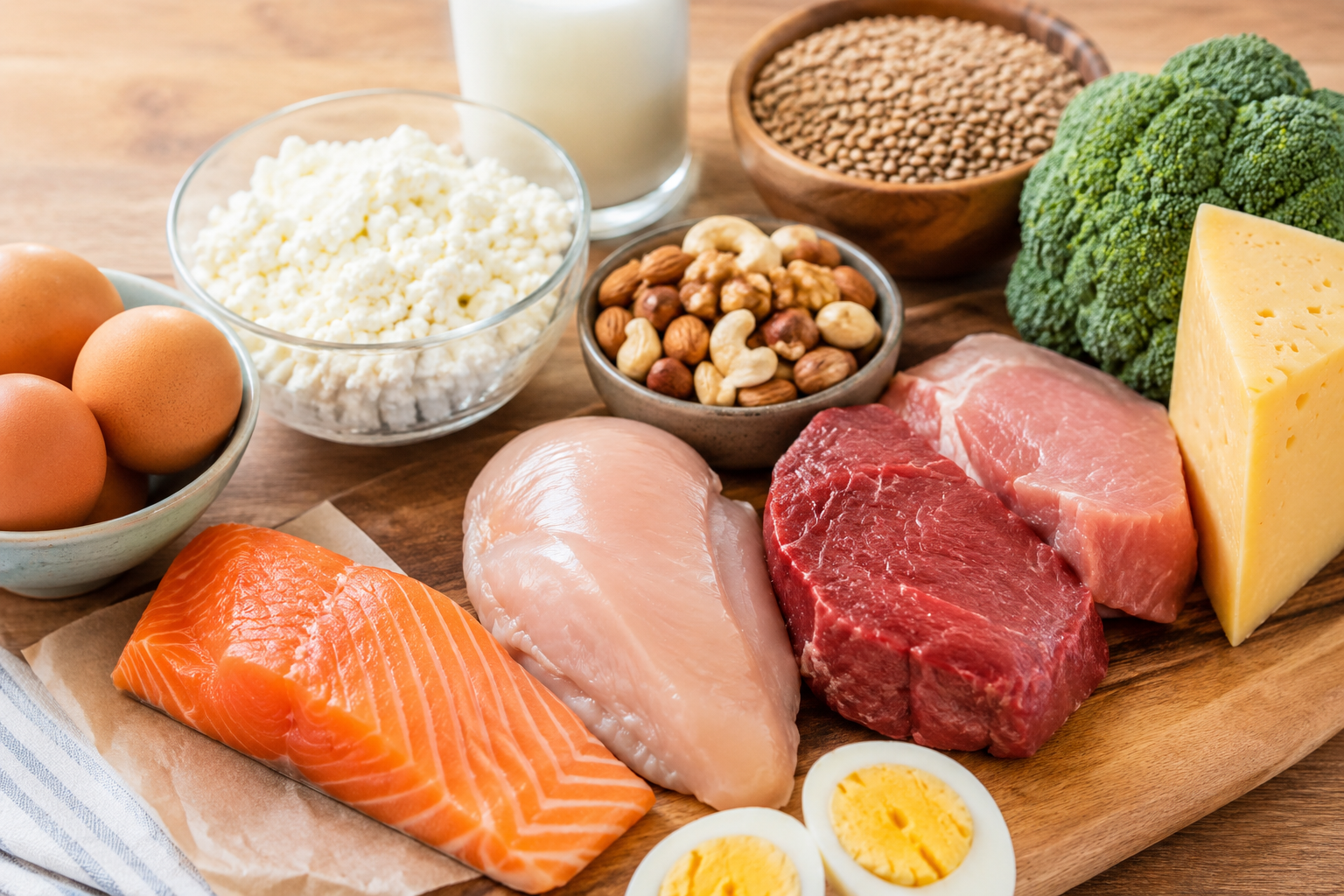
Animal Protein Sources
Common choices include:
eggs;
fish and seafood;
chicken and turkey;
meat;
Greek yogurt;
cottage cheese;
milk and other dairy foods.
These foods do not all have the same nutritional profile. Some contain more fat, calcium, iron, vitamin B12, or other nutrients than others.
That is a good reason to rotate your choices instead of building every meal around the same food.
Plant Protein Sources
Plant foods can contribute meaningful amounts of protein too. Examples include:
beans;
lentils;
chickpeas;
peas;
tofu;
tempeh;
soy foods;
nuts;
seeds.
A well-planned plant-based diet can provide enough protein.
There is also no need to carefully match two specific plant proteins at every meal. A more practical approach is to eat a variety of protein-containing plant foods across the day while making sure your total food intake is adequate.
Do You Need Protein Powder?
No.
That answer is worth making clear because marketing often makes protein powder sound like a basic requirement of exercise.
It is not.
Protein powder is simply a convenient way to add protein. For some people, that convenience is genuinely useful. You might use it when you are rushing to work, traveling, have little appetite after training, or find it difficult to get enough protein from regular meals.
For someone who already eats enough protein, another shake is not automatically an upgrade.
Whole foods also provide nutrients beyond protein, so they remain a useful foundation for everyday eating.
Use protein powder when it solves a real problem.
You do not need it just because you own workout clothes.
Can You Eat Too Much Protein?
A higher number does not automatically create a better result.
Once your needs are being met, adding more and more protein does not guarantee more muscle or better health. It can also make the rest of your diet unnecessarily narrow.
Picture a meal where nearly everything is meat or another protein food. There may be little space left for vegetables, whole grains, fruit, beans, or other foods that provide fiber and different nutrients.
Balance still matters.
There is also an important medical exception to general high-protein advice.
People with chronic kidney disease may need a protein intake that is different from recommendations for healthy adults. Some people with CKD are advised to consume moderate amounts of protein, while people receiving dialysis can have different needs.
That is something to decide with a healthcare professional or registered dietitian, not from a general protein calculator on the internet. NIDDK specifically recommends individualized guidance because protein needs can change as kidney disease progresses.
Frequently Asked Questions
How Much Protein Do I Need Per Day?
There is no single number that fits every adult.
As a general reference, the current U.S. Dietary Guidelines use a protein serving goal of about 0.55–0.73 grams per pound of body weight (1.2–1.6 g/kg/day), adjusted for individual calorie needs.
The long-standing adult RDA is lower, at about 0.36 g/lb (0.8 g/kg/day).
Activity, age, total diet, and health can change what makes sense for an individual.
Is 100 Grams of Protein a Lot?
It depends on how much you weigh.
For a person at 154 lb (70 kg), 100 grams works out to around 0.65 g/lb (1.4 g/kg).
For someone at 198 lb (90 kg), the same 100 grams is around 0.50 g/lb (1.1 g/kg).
Without body weight and context, “100 grams” does not tell the whole story.
Do I Need More Protein If I Work Out?
You may.
People who exercise regularly often use higher protein targets than sedentary adults. Sports nutrition literature commonly cites approximately 0.64–0.91 g/lb (1.4–2.0 g/kg/day) for active individuals.
That does not mean everyone who exercises needs the upper end of the range.
Can I Get Enough Protein From Plants?
Yes.
Beans, lentils, soy foods, tofu, tempeh, nuts, seeds, peas, and other foods can all contribute. A varied, well-planned plant-based eating pattern can meet protein needs.
Do I Need Protein Powder?
No.
Protein powder can be convenient, but it is optional. If regular food already provides enough protein for your needs, there is no requirement to add a shake.
The Better Healthy Life Takeaway
Protein is important, but it should make your nutrition easier to understand — not harder.
Start with your body weight and activity level. Use a protein range to give yourself some direction, then look at the food you actually eat.
Are there useful protein sources in your meals? Are you eating enough overall? Does your diet still have room for vegetables, fruit, quality carbohydrates, healthy fats, and variety?
Those questions matter more than chasing the largest number on a nutrition label.
Protein is part of a complete nutrition strategy. It works alongside the rest of your diet, not above it.
Eat enough for your needs.
Then get on with your day.
Nutrition & Medical Disclaimer
This article is for general educational purposes only and is not a substitute for personalized medical or nutrition advice.
Protein needs can vary according to age, activity level, pregnancy, health conditions, medications, total calorie intake, and other individual factors.
If you are pregnant, have kidney disease or another diagnosed medical condition, take medication that may be affected by dietary changes, have a history of an eating disorder, or require a therapeutic diet, speak with your physician or a qualified registered dietitian before making major changes to your protein intake.
Sources & References
- U.S. Department of Health and Human Services & U.S. Department of Agriculture — Dietary Guidelines for Americans, 2025–2030.
- National Academies / NCBI Bookshelf — Dietary Reference Intakes and Recommended Dietary Allowance for Protein.
- Journal of the International Society of Sports Nutrition — Protein and Exercise guidance.
- National Institute of Diabetes and Digestive and Kidney Diseases — Healthy Eating for Adults with Chronic Kidney Disease.